
How DEXA Scans and Similar Technologies May Be Used in Healthcare in 2035
At Doc Dialogue, we often talk about the gap between what people feel day to day and what is actually happening beneath the surface of their health. By 2035, we believe tools like DEXA scans will play a central role in closing that gap and making preventive healthcare far more tangible and personal.
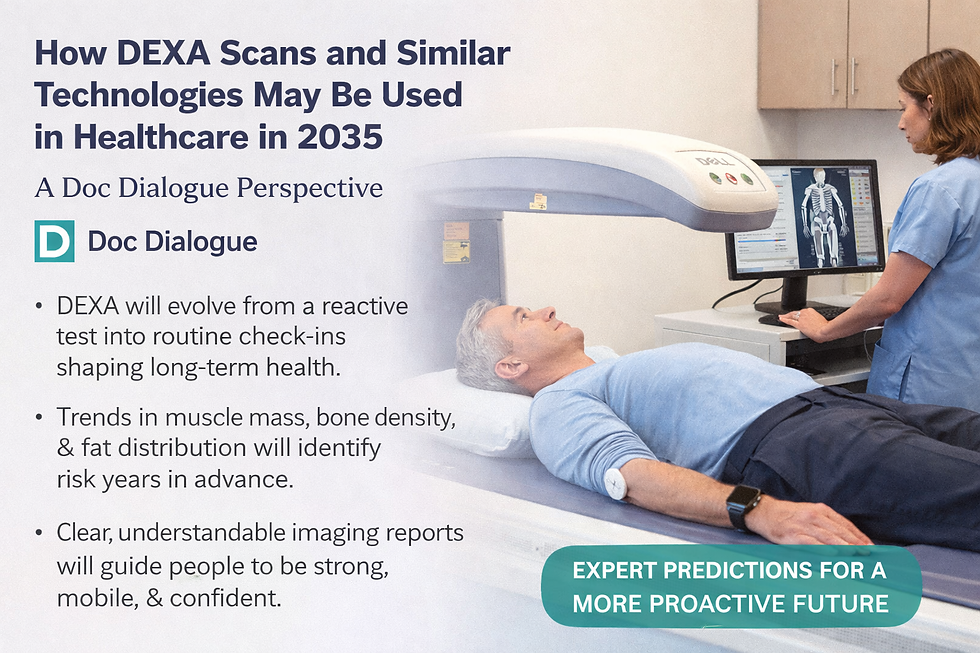
Today, DEXA is usually framed as a test you get when something is already wrong. In the future, we see it becoming a few yearly routine check in, but focused on the physical structures that quietly determine long term health. Muscle mass, bone density, and fat distribution change slowly, but they change meaningfully. At Doc Dialogue, we see these shifts as early signals, not end stage diagnoses.
We believe the real power of DEXA in 2035 will come from tracking trends over time rather than reacting to single results. Small losses in lean mass or subtle increases in visceral fat often precede metabolic disease, frailty, and injury by years. Catching these patterns early allows people to adjust training, nutrition, and lifestyle while the changes are still reversible.
Another strong belief at Doc Dialogue is that data must be understandable to be useful. Future imaging reports should not feel like radiology documents written for specialists. They should clearly show people how their body is adapting to stress, aging, and daily habits. When people can see where strength is declining or resilience is improving, health advice becomes far more actionable.
We also see DEXA integrating naturally with wearable and metabolic data. Imaging provides the structural context that explains performance, recovery, and energy. Together, these tools can shift healthcare away from reactive treatment and toward long term capability and independence.
By 2035, we believe DEXA will not be about diagnosing disease. It will be about helping people understand their bodies, make informed choices, and invest early in the version of themselves they want to carry into later life.
We're curious to hear what you think about the future of body composition measurement technologies!
Discover evidence-based insights and practical guidance on navigating your health: www.doc-dialogue.com

Comments